

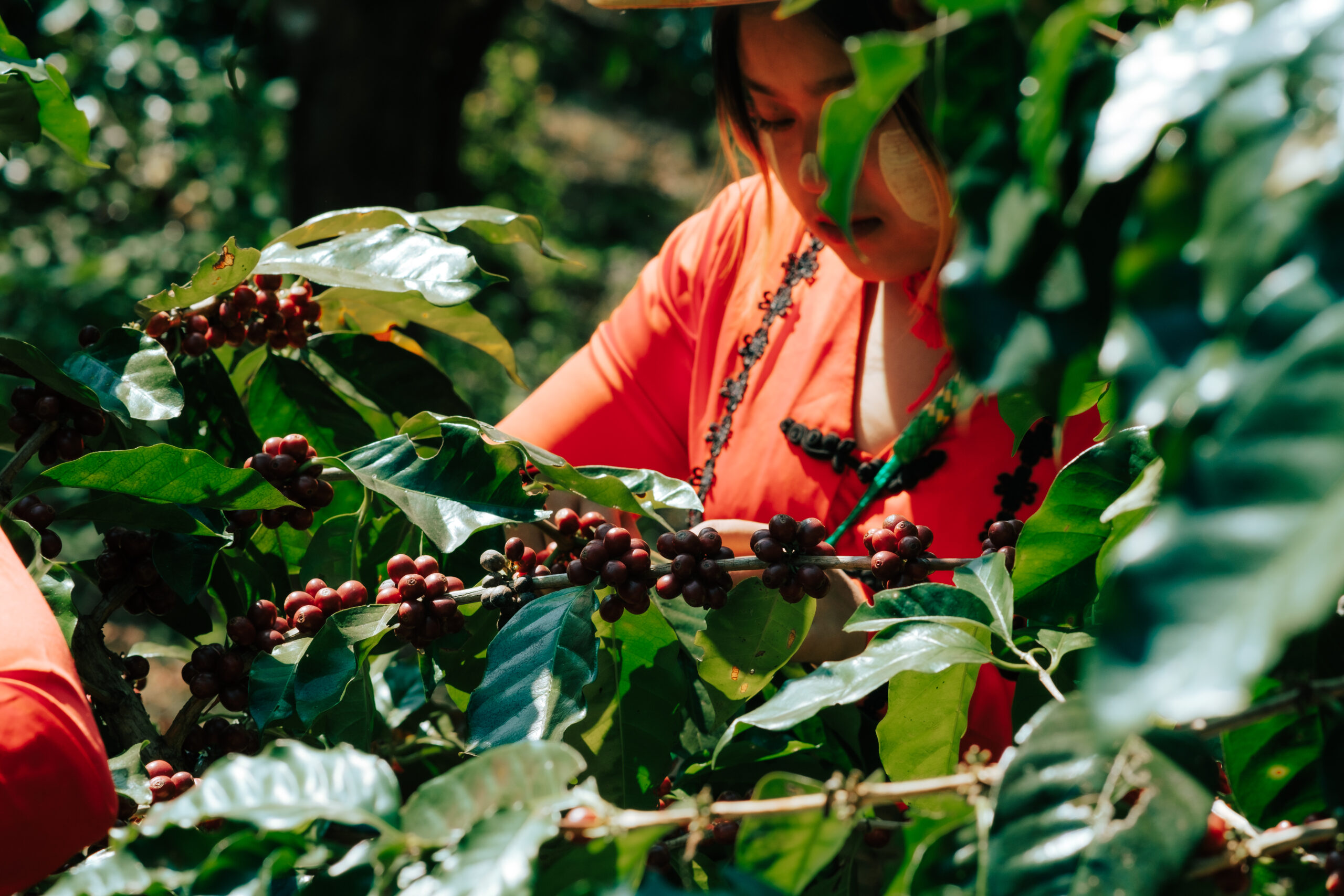
The intricate relationship between environmental factors and the Arabica bean’s quality underscores the importance of terroir in coffee production. Terroir profoundly shapes the chemical makeup of Arabica green coffee beans through environmental factors like altitude, temperature, soil, and rainfall. These elements influence key non-volatiles such as chlorogenic acids, caffeine, trigonelline, and sucrose, as well as volatiles that act as aroma precursors.
Defining Terroir
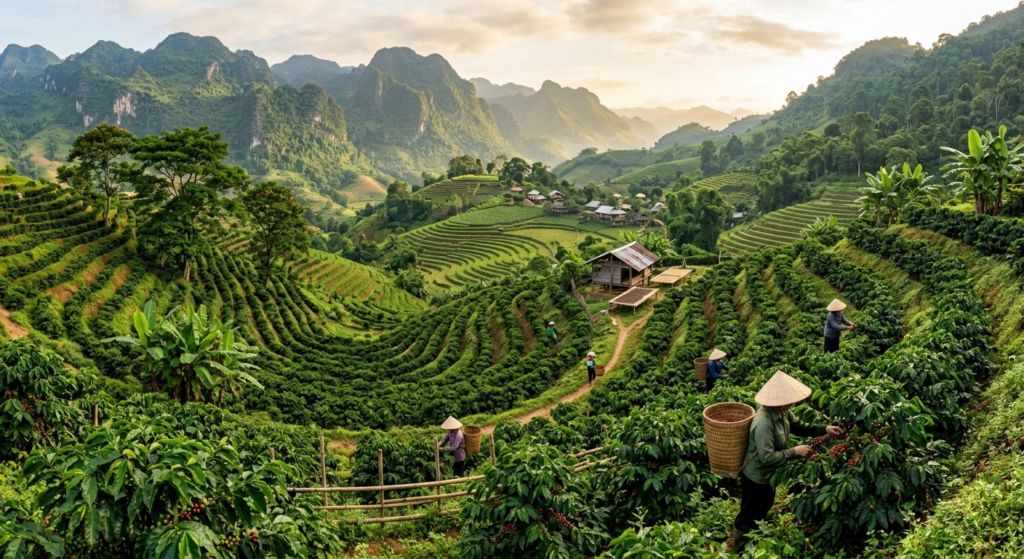
Terroir encompasses the unique interplay of climate, soil, topography, and altitude in a coffee’s growing region. For Arabica (Coffea arabica L.), optimal terroir features altitudes of 1,200–2,200 m above sea level, temperatures of 15–24°C, and well-drained volcanic or loamy soils rich in organic matter. This combination drives metabolic changes in the bean, altering its biochemical profile before roasting.
These metabolic changes are crucial as they ultimately determine the sensory attributes of the brewed coffee, highlighting the significance of terroir in producing high-quality Arabica coffee.
Altitude Effects
Higher altitudes slow bean maturation, promoting denser beans with elevated sucrose (up to 25.7 g/100g) and trigonelline levels, while reducing chlorogenic acids (down to 3.7 g/100g). Ethiopian samples at 2,775 m.a.s.l. showed heavier beans (17.28g per 100) and higher crude fat (16.83%), correlating positively with elevation (r > 0.5). Lower altitudes yield higher chlorogenic acids due to warmer conditions accelerating biosynthesis. These findings illustrate how altitude not only affects the physical characteristics of coffee beans but also significantly influences their chemical composition, which ultimately impacts flavor profiles.
Temperature and Rainfall
Average temperatures negatively correlate with bean moisture, fat, trigonelline, and sucrose, as cooler conditions extend ripening for greater accumulation. Warmer sites boost chlorogenic acids but lower pH and titratable acidity. Rainfall shows weaker links, though higher precipitation slightly reduces caffeine. Understanding these interactions is essential for optimizing coffee production practices to enhance quality and meet growing market demands.
Soil Influence
Rhizospheric soil chemistry varies with altitude, affecting nutrient uptake and bean volatiles. Volcanic soils in highland Ethiopia enhance phenolic compounds, while mineral-rich loams in Colombia discriminate genotypes via chlorogenic acids and fatty acids. These soil variations contribute to the overall terroir, further influencing the sensory characteristics and quality of the final coffee product.
Volatile Compounds
Terroir imprints VOCs like methoxypyrazines (higher in high-altitude Ethiopian beans for green/grassy notes) and aldehydes. Brazilian lowlands favor nutty pyrazines; Ethiopian highlands boost hexanoic acid and furans for sweetness. HS-GC-IMS and GC×GC-MS fingerprint these for origin tracing. The interplay of these factors illustrates the complexity of terroir in coffee production, emphasizing the need for tailored cultivation strategies to enhance flavor and quality.
Regional Examples
Ethiopian agroecologies show PCA-clustered beans by elevation, with southeast samples high in trigonelline. Colombian terroirs differ in chlorogenic acids and elements across sites.

From the high-density, sucrose-rich beans of the Ethiopian highlands to the phenolic-heavy profiles of volcanic soils, these environmental factors dictate the presence of the precursors that eventually transform into flavor during roasting. For producers and specialty graders, understanding these chemical markers is essential. By mastering the science of terroir, the industry can better predict quality, ensure origin authenticity, and ultimately, refine the sensory experience of every cup.
References:
- Bordiga, M., Disca, V., Manfredi, M., Barberis, E., Carrà, F., Navarini, L., Lonzarich, V., & Arlorio, M. (2025). Fingerprinting of Green Arabica Coffee Volatile Organic Compounds (VOCs): HS-GC-IMS Versus GC × GC-MS. International journal of food science, 2025, 1302823. https://doi.org/10.1155/ijfo/1302823
- Pettazzoni, I., Benati, G., Monari, S., De Angelis, E., Navarini, L., Ferri, M., & Tassoni, A. (2026). Geographic provenance and environmental growing conditions as factors influencing phytochemical composition of Arabica green coffee beans. Plant biology (Stuttgart, Germany), 28(2), 520–534. https://doi.org/10.1111/plb.70136
- Urugo, M. M., Tola, Y. B., Kebede, B. T., & Ogah, O. (2024). Insight into the effects of environmental variables on the physicochemical characteristics and biochemical composition of green Arabica coffee. Beverage Plant Research, 4(1).
